
What does philosophy have to do with generative AI? More than you’d think.
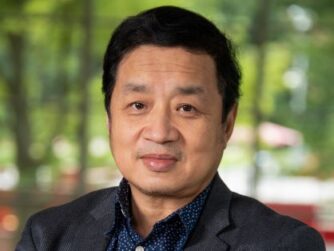
In this episode, hosts Ashfin and Antonio sit down with Peter Tanski, Distinguished Engineer in Generative AI at Capital One, whose path to tech runs through some unexpected territory — philosophy and law. Peter breaks down how studying philosophy sharpened his critical thinking and communication skills, and how a background in law trained him to dissect complex systems and requirements. Far from detours, these disciplines became the foundation of his engineering career.
The conversation delves into the topics defining modern AI: large language models, retrieval-augmented generation (RAG), agent systems, AI ethics, hallucinations, and the long road toward AGI. Peter explains how today’s most reliable AI systems depend on context, human oversight, and careful design — and gets candid about the risks of getting it wrong, from prompt injection and deepfakes to privacy vulnerabilities and overreliance on AI outputs.
The episode also tackles a question on many students’ minds: Is AI coming for engineering jobs? Peter’s take is nuanced — major companies are rapidly integrating AI coding tools, but engineers are evolving alongside the technology rather than being replaced by it. His advice for students is practical and direct: focus on the fundamentals, build real projects, embrace creativity and collaboration, and treat AI as a powerful tool — not a substitute for genuine understanding.
The episode closes with a look at engineering career progression, the role of staff engineers inside large organizations, and why interdisciplinary thinking may be the most underrated skill in tech today.
This conversation offers valuable insights not just for aspiring engineers, but for anyone curious about how AI is reshaping industries, careers, and the very way we think about problem-solving.
References: